Latest Issues — Chronological
- Money in Translation: How to Read Foreign-Currency Exposure and the Hedging Note in an Indian Annual Report
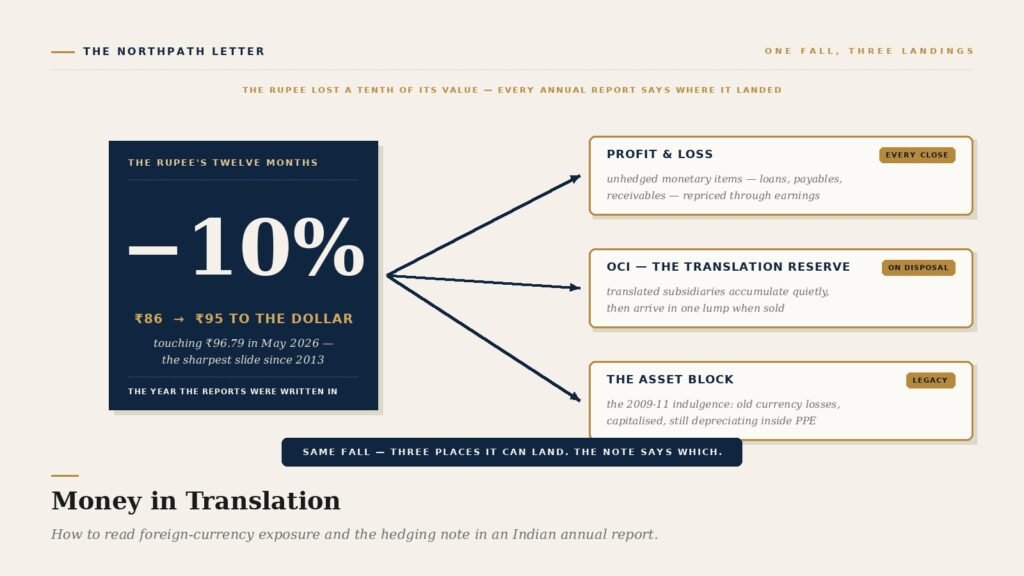 Suzlon borrowed $300 million at ‘zero coupon’ in 2007 — convertible at ₹1,800 a share, struck at ₹40.83 to the dollar, repayable at 145.23 per cent if the equity dream failed. It failed, the rupee fell, and October 2012 brought India’s biggest convertible default. Every mechanic had been in the notes for years. How to read foreign-currency exposure in an Indian annual report: functional currency, where a falling rupee lands, the hedge-accounting tables, the sensitivity you must scale — and the new exchangeability disclosure appearing for the first time this season. With an eight-question drill.
 - The Journey of One Dollar: What Profit Margins Tell You About the Quality of a Business
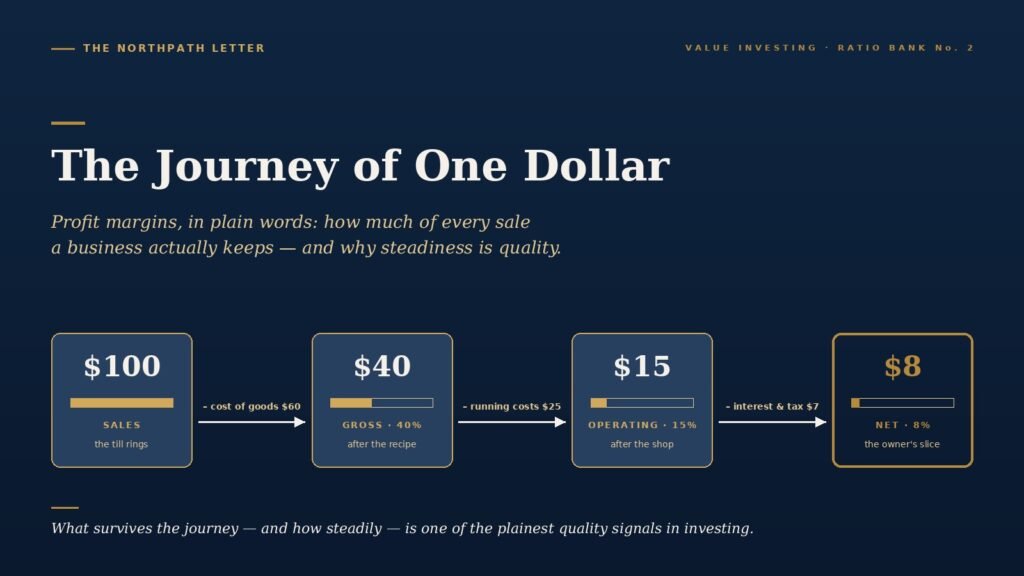 Profit margins, explained in plain words: follow a hundred dollars of sales through the three checkpoints of a small bakery, learn why a fat and steady margin is the footprint of pricing power, and pick up Philip Fisher’s oldest quality question.
 - The Overreaction Hypothesis: De Bondt and Thaler’s 1985 Discovery That Yesterday’s Losers Beat Yesterday’s Winners, and Why the Long-Term Equity Investor Should Distrust Prices Set at the Emotional Extremes
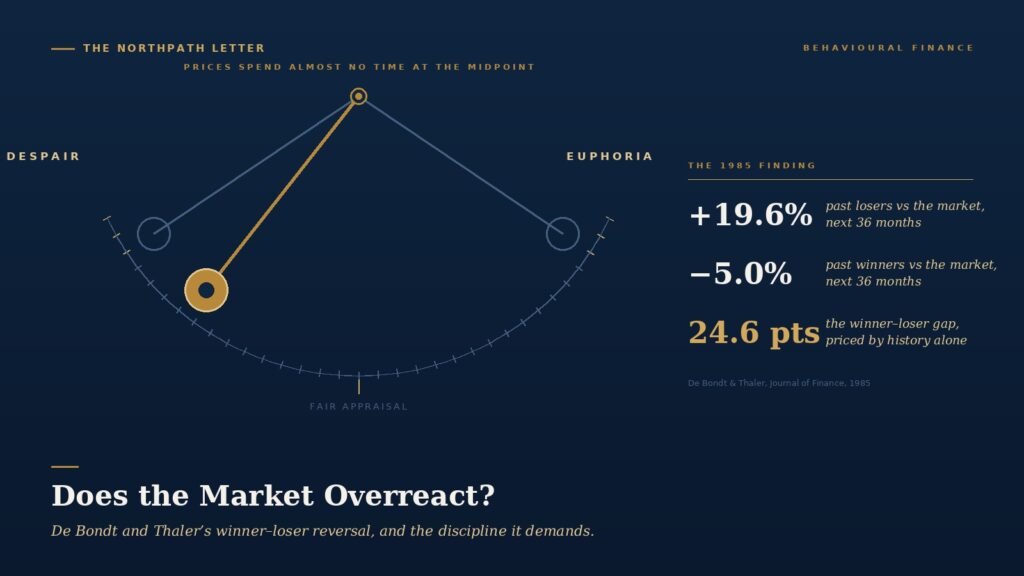 In 1985 De Bondt and Thaler sorted half a century of NYSE returns into extreme winners and losers: over the following three years the losers beat the winners by 24.6 points. Essay No. 37 traces the overreaction hypothesis and the disciplines that answer the emotional price.
 - The Shopkeeper’s Test: What Return on Equity Tells You About the Quality of a Business
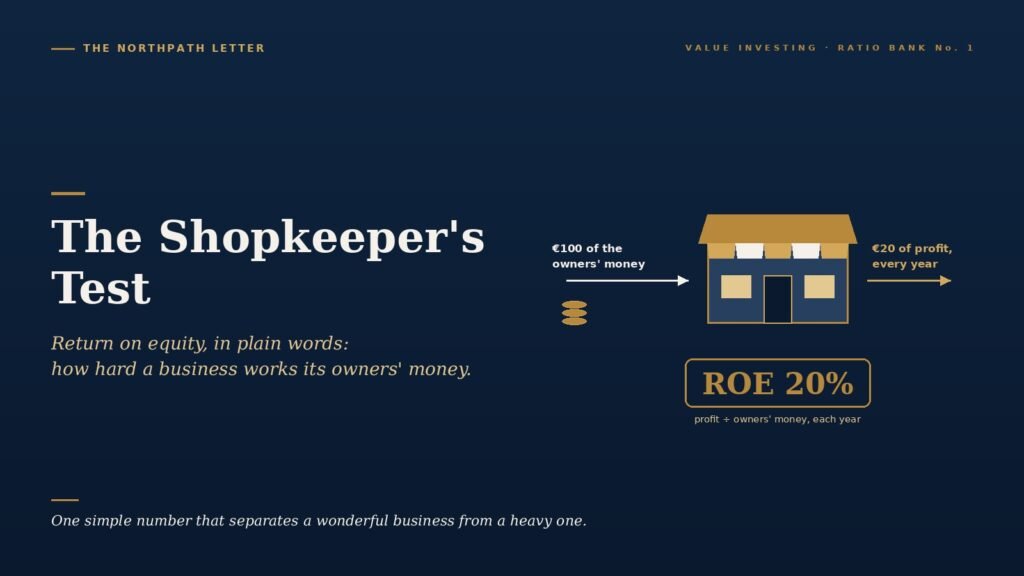 Return on equity, explained in plain words: how one simple number separates a wonderful business from a heavy one, what the See’s Candies story shows, and the three habits that keep the number honest.
 - The Second Currency: How to Read Foreign-Exchange Exposure, Ind AS 21, and the Hedging Note in an Indian Annual Report
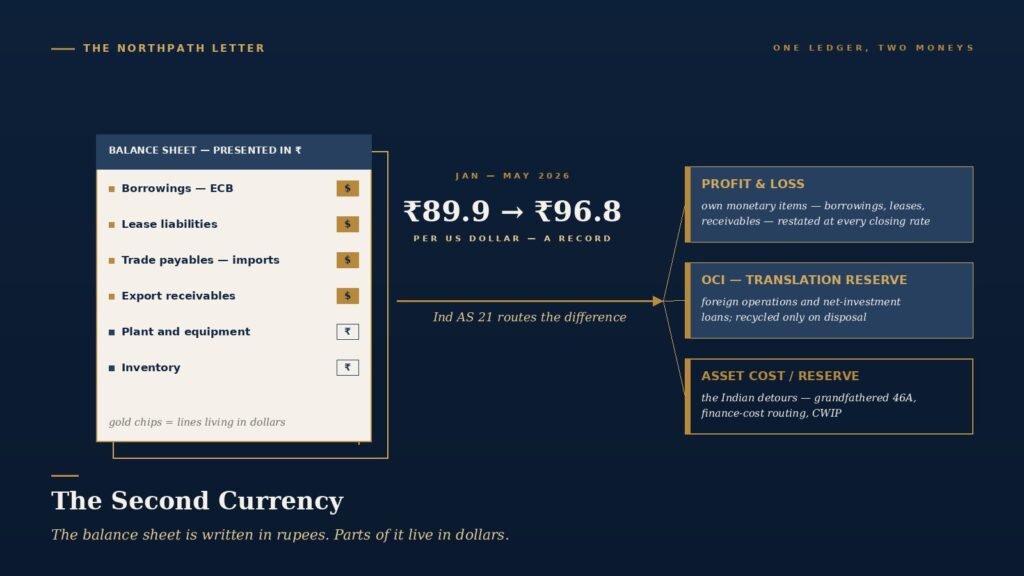 IndiGo lost ₹4,820 crore in a quarter without buying or selling a thing — the closing rate moved. How to read foreign-currency exposure in an Indian annual report: the functional-currency diagnosis, Ind AS 21’s three destinations, the Indian detours, the hedging note, and the eight questions that price a ten-per-cent move.
 - The Decoy Effect: Huber, Payne and Puto’s 1982 Discovery That an Option Nobody Chooses Can Change the One You Do, and Why the Long-Term Equity Investor Should Distrust the Menu
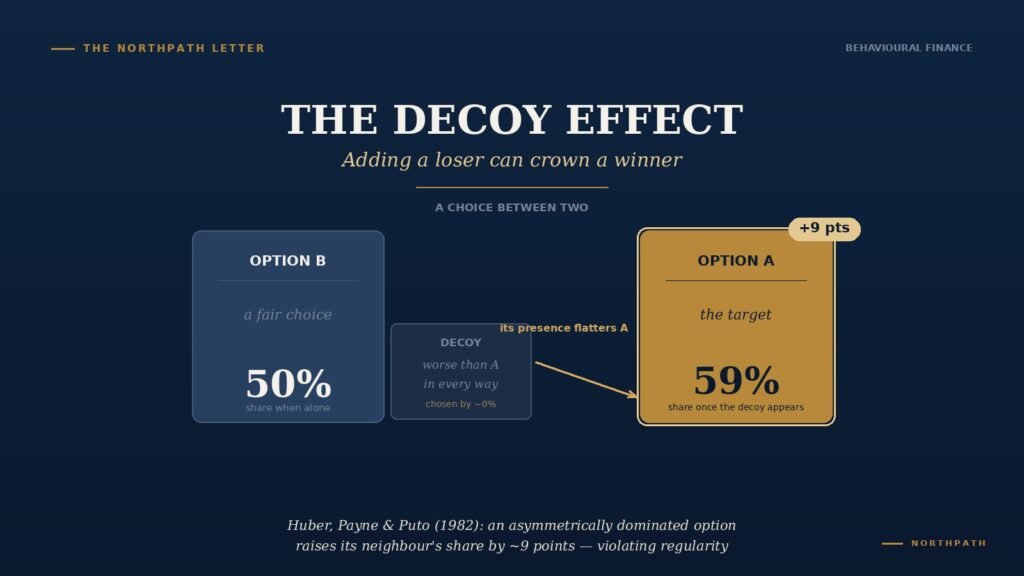 In 1982 Huber, Payne and Puto showed that adding an option nobody picks can change which of the others people choose. Essay No. 36 follows the decoy effect from a magazine’s price menu into fund share classes and structured notes, and the disciplines that disarm it.
 - Bought, Not Paid: How to Read Trade Payables, MSME Dues and Supplier Finance in an Indian Annual Report
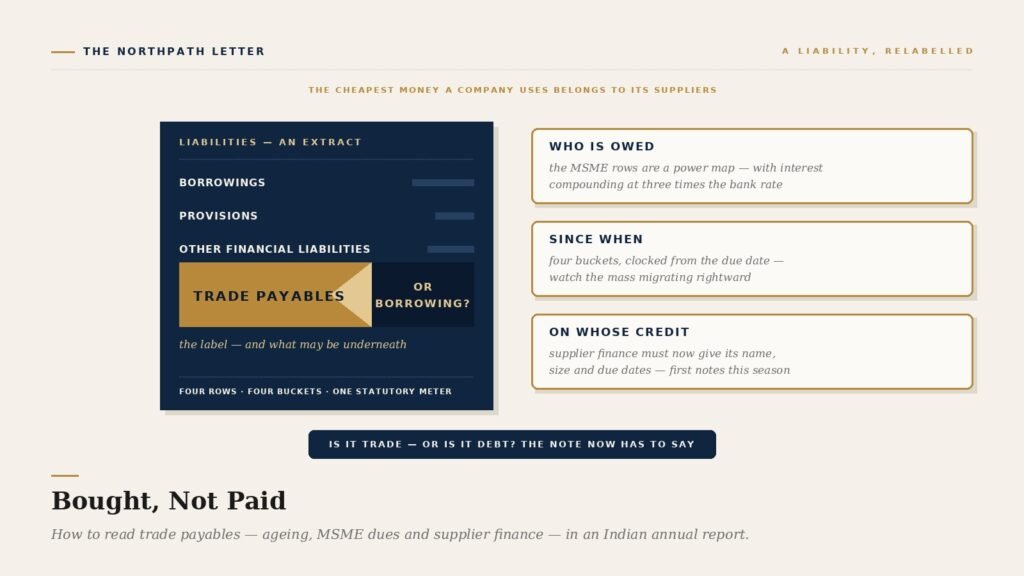 Carillion’s balance sheet showed £148 million owed to banks — and up to £498 million more sat inside ‘other creditors’, borrowed money dressed as unpaid bills. How to read the trade payables note in an Indian annual report: the four-row ageing matrix, the MSME regime with its statutory meter, what stretching really buys, the reverse-factoring triangle — and the new Ind AS note, appearing for the first time this season, that makes supplier finance give its name. With an eight-question drill.
 - Spurious Correlation: G. Udny Yule and the Nonsense-Correlations Problem (1926)
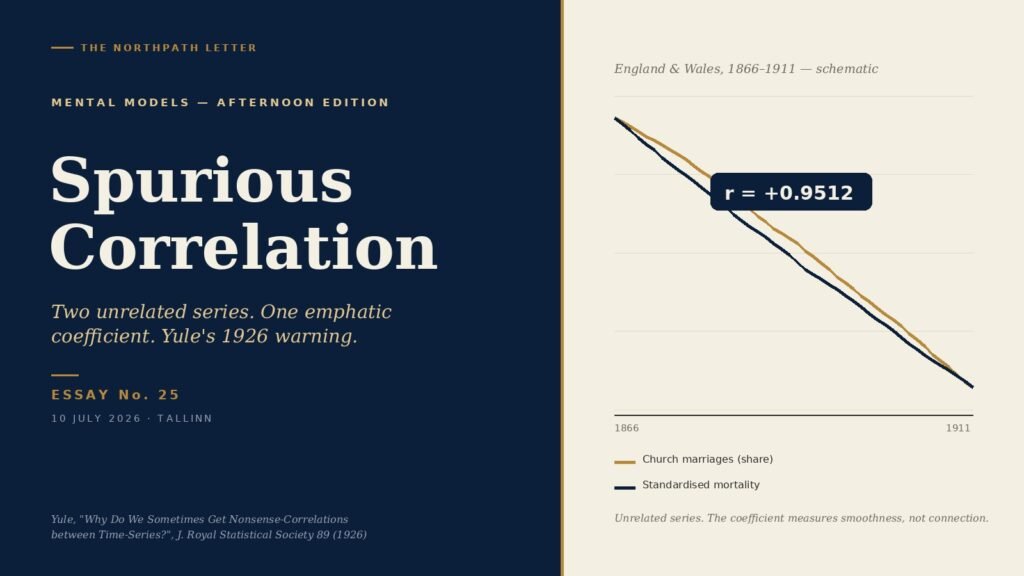 In 1926 G. Udny Yule showed two unrelated Victorian series correlating at +0.9512. Essay No. 25: why trending data manufactures meaningless coefficients, what Granger and Newbold proved, and the habits that protect a long-term investor from data-mined evidence.
 - Home Bias: French and Poterba’s 1991 Discovery That the World’s Investors Stay Home, and Why the Long-Term Equity Investor’s Map Must Be Larger Than His Address
 French and Poterba’s 1991 measurement: 94% of American, 98% of Japanese and 82% of British equity portfolios sat at home — an arithmetic no shared forecast can deliver. Essay No. 35 traces the psychology of the familiar, from Tokyo 1989 to Enron’s 401(k), and the disciplines that widen the map.
 - Sold, Not Settled: How to Read Trade Receivables and the Ageing Schedule in an Indian Annual Report
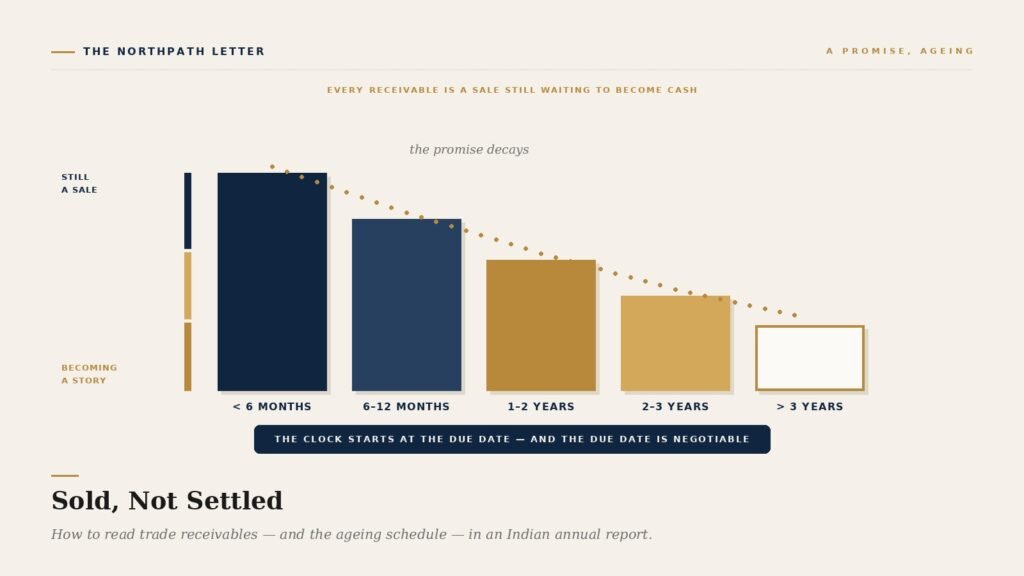 Nearly a fifth of what Satyam’s customers supposedly owed it was owed by nobody — because invented revenue has to sleep somewhere, and it sleeps in receivables. Since 2021, every Indian company must publish its promises arranged by how long each has been broken: the six-row ageing matrix, the loss allowance behind it, the games the due date still permits, and the tracks channel stuffing leaves — with an eight-question drill.
The Members’ Archive
112
premium essays — and growing every day
Subscribe once to Manish Goel Plus and unlock every one — plus each new daily edition, for as long as you’re a member.
Unlock all 112 essays →The NorthPath Letter · Free
Subscribe to The NorthPath Letter
Long-form strategic analysis of global businesses and capital markets, delivered to your inbox. Free, weekly, no spam — unsubscribe anytime.